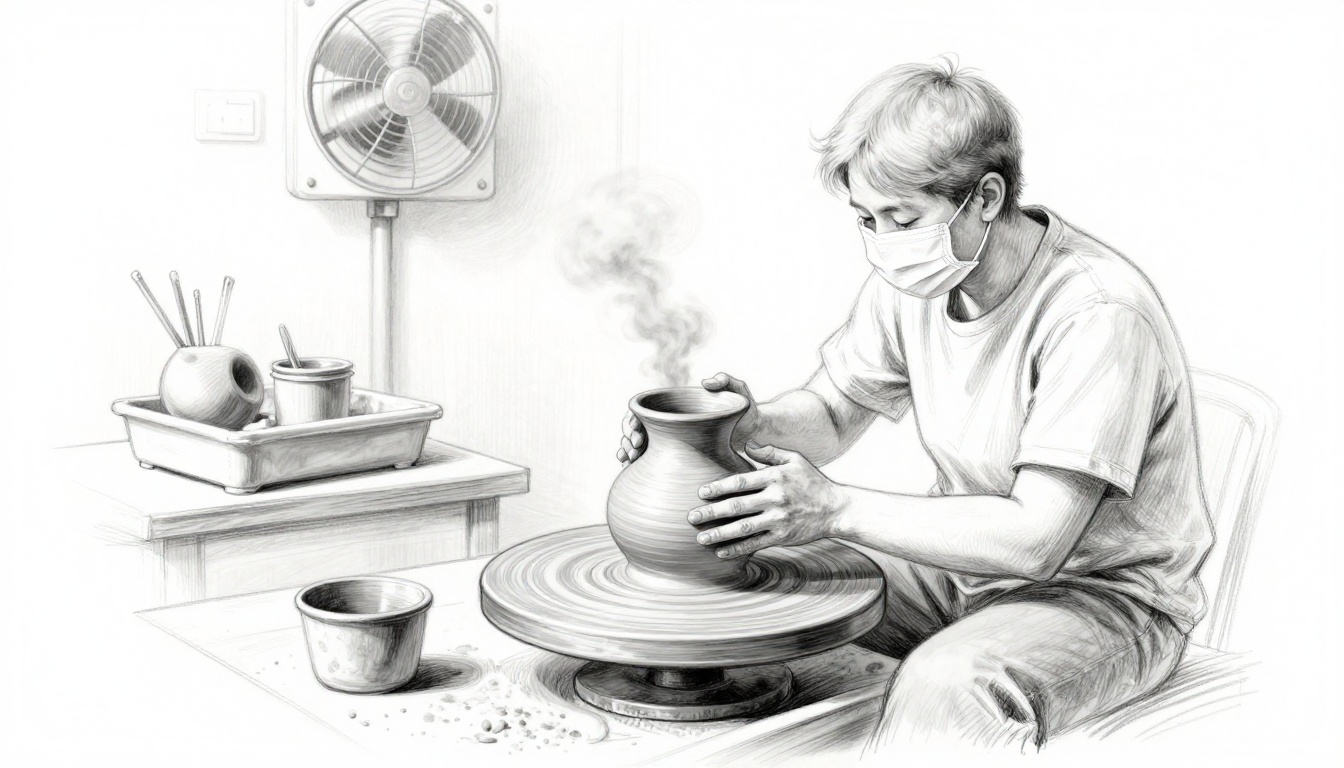
You start pottery as a fun hobby in your home studio. A few weeks in, you cough more than usual. You blame spring allergies. Then you learn the real culprit: clay dust from your projects.
Clay dust means tiny particles from dry clay. It often carries silica. These bits float in the air when you throw, trim, or sand pots. Beginners must handle it right away. That keeps your lungs healthy and your space safe. You can still create without worry.
This guide covers health risks, prevention steps, tools, and cleaning routines. Safety experts say good dust control cuts exposure by up to 90 percent. You’ll get simple tips that fit any small workspace. Let’s keep your pottery passion going strong.
Why Clay Dust Poses Real Risks to Your Health and Workspace
Clay dust harms because it holds respirable crystalline silica. This acts as a lung irritant. You breathe it in during normal pottery tasks. Home potters face the same dangers as pros without controls.
Short-term effects hit fast. Eyes sting. Throats get sore. Sinuses clog. Dust settles on floors too. That makes surfaces slippery. Tools rust or clog from buildup. Act now to avoid these issues.
OSHA reports silica dust causes over 100 deaths each year in the US from silicosis. You don’t need a big studio to see problems. Small spaces trap dust longer. Prevention beats dealing with mess later.
Common Short-Term Symptoms You Might Notice First
Dry cough starts first. Your nose stuffs up. Eyes itch and water. Headaches follow heavy sessions. Skin rashes appear from direct contact.
These signs show up quick. They tie to tasks like trimming greenware or sanding bisque. Track them in a log. Note work time and how you feel after. That spots dust as the cause.
Beginners often ignore early warnings. Don’t wait. Simple changes stop symptoms fast.
Serious Long-Term Health Concerns to Watch For
Silicosis scars your lungs over time. Silica particles lodge deep. Breathing gets harder after years of exposure. Links exist to lung cancer and kidney disease too.
Clay holds talc or other minerals. They add extra risks. NIOSH sets safe limits at 50 micrograms per cubic meter over eight hours. NIOSH silica exposure guidelines explain more.
Damage builds quiet. Prevention works best. You protect your health for decades of pottery.

Easy Prevention Steps to Stop Dust Before It Starts
Habits beat gear for beginners. Keep clay moist. Use splash pans on wheels. Cover tables with plastic sheets. These cut dry clay handling by 80 percent.
Layout matters. Set work zones away from living areas. Drop cloths catch stray dust. Good flow keeps particles from spreading. Build these basics first.
You save money and effort. Results show in cleaner air right away.
Switch to Wet Methods for Less Airborne Dust
Spray tools and bats with water before you start. Wedge clay while damp. Try slip casting instead of dry mixes. Particles stay heavy and drop.
Fill a spray bottle with plain water. Mist surfaces lightly. Wipe excess. Recycle slurry into new clay. That saves material too.
Wet work feels natural after a few tries. Dust drops fast.
Improve Air Flow to Clear Dust Naturally
Open windows wide. Point box fans outward. Add an exhaust fan above your wheel. For DIY, aim a fan at an open door.
Skip AC units. They recirculate dust. In apartments, grab portable HEPA purifiers rated for silica. Fresh air pulls particles away.
Better flow means less buildup. Your space stays breathable.
Must-Have Tools and Protective Gear for Beginners
Gear boosts your habits. Start with N95 masks. They block 95 percent of fine particles. P100 cartridges work even better for silica. Find budget picks under $50 at hardware stores or pottery sites.
Fit matters most. Loose gear fails. Wear it during dry tasks only. These pair with wet methods for full protection.
Comfort keeps you consistent. Pick what you use every time.
Respirators and Masks That Actually Protect
Disposables work for light use. Half-face respirators with cartridges last longer. Test fit: cover the filter and inhale. No air leaks? It’s good.
Start with 3M models. Store them clean. Facial hair blocks seals? Consider powered air units. Use only on dry jobs.
Right mask changes everything.
Cleanup Tools Built for Clay Dust
HEPA shop vacs beat brooms. Brooms kick dust back up. Wet-dry vacs with fine filters grab it all. Add microfiber mops and vacuumable mats.
Vacuum first. Damp wipe next. Skip compressed air. Shop-Vac HEPA kits shine here.
These tools make cleanup quick.

Build Cleaning Routines That Keep Dust Away Long-Term
Consistency wins. Daily wipes stop buildup. Weekly deep cleans refresh everything. Monthly checks seal gaps.
Store dry clay in sealed bins. Tie all tips together. Low dust means healthy sessions.
Troubleshoot returns: inspect vents or covers.
Quick Daily Cleanups to End Your Sessions Right
Spend 10 minutes at session end. Follow this checklist:
- Wet wipe wheel and table.
- Vacuum the floor.
- Spray and cover tools.
- Empty trash outside.
It prevents overnight spread. Make it habit.
Weekly Deep Cleans for a Fresh Start
Move items if needed. Vacuum walls and ceilings. Wash surfaces with mild soap. Swap HVAC filters.
Restock masks. Note air quality changes. Fewer symptoms mean success.

Good routines build safe habits. Strong prevention cuts risks. Gear protects during work. Cleaning keeps it all in check.
Picture worry-free pottery. Lungs clear. Studio fresh. Grab a HEPA vac today. Share your first win in comments.
Check OSHA’s pottery safety resources or the NIOSH silica app. Create more pots with peace of mind.