Ever grabbed a lump of clay, excited to shape your first pot, only to watch it slump or crack because it dried too fast? That frustration hits every new potter. You waste time and clay without knowing the stages of clay.
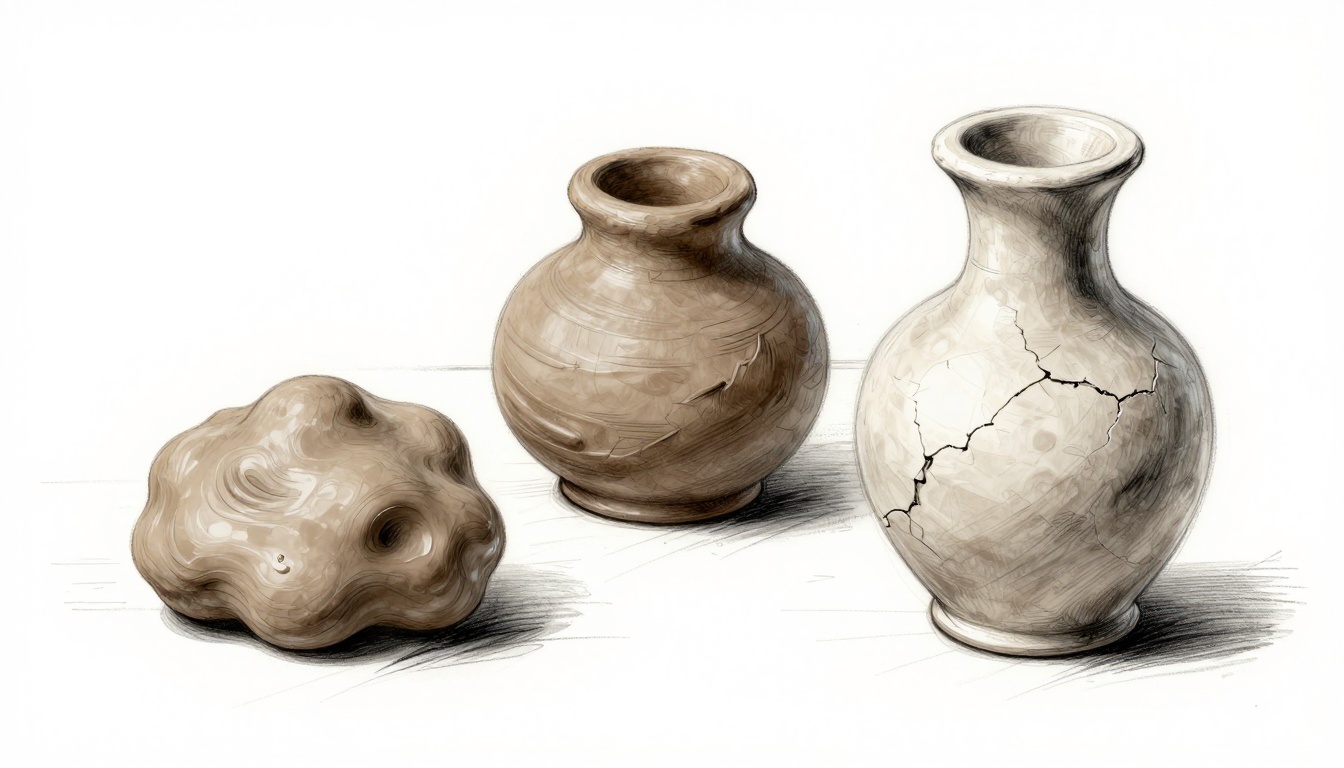
Clay changes as it dries. It goes through wet, leather-hard, and bone-dry phases. Each stage looks and feels different. Spot them right, and your projects succeed. Wet clay shines and squishes. Leather-hard firms up for carving. Bone-dry turns light and fragile.
This guide shows you simple sight and touch tests. You’ll learn what to build at each stage. By the end, you’ll handle clay with confidence. No more guesswork. Let’s start with the soft beginning.
Spotting Wet Clay: The Soft and Sticky Starting Point
Wet clay comes straight from wedging or packaging. It’s plastic and ready to mold. Think fresh playdough that gives under pressure. The surface gleams with moisture. Colors run dark because water soaks in.
Store it in plastic bags to keep that moisture even. If it’s too wet, pieces slump during building. Always wash hands after handling to avoid slips on tools.
For more on preparing wet clay, check this guide to wedging techniques.
Visual Clues That Scream ‘Wet Clay’
Look for a shiny skin over the whole piece. Water forms a thin film, so no dry spots appear. The color matches your clay body but deeper, like earthenware’s rich brown or stoneware’s gray-black. Hold it under good light. You’ll see moisture glisten, unlike the dull leather-hard stage.
Edges stay uniform. No light patches show because drying hasn’t started.
Touch Tests to Confirm It’s Wet
Press a finger in. It sinks smooth without cracking. Clay sticks a bit but squishes easy. Pinch a small bit. It deforms and springs back slightly. The piece feels heavy from all the water.
Drag your finger across. It leaves a clean groove and wet print. In contrast, leather-hard resists more.
What to Build and Avoid in Wet Clay
Throw on the wheel or roll slabs now. Coils stack well too. Pinch small pots for practice. But skip thin walls. They sag under weight.
Wedge first for even moisture. That prevents weak spots later.
Leather-Hard Clay: Firm Enough to Carve but Still Flexible
Clay reaches leather-hard after one to three days. Humidity slows it down. Warmer air or fans speed things up. The surface turns matte as water evaporates. Color lightens overall.
It feels cool and stiff, like firm leather. You can scratch designs but not dent deep. This stage suits refining shapes.
Thickness matters. Thicker pieces take longer. Airflow around them helps control the pace.
Key Looks and Color Changes
Shine fades to a flat finish. No water beads form anymore. Color shifts lighter, often two shades paler than wet. Edges dry first, so watch for uneven tones. Compare to bone-dry, which looks even paler and powdery.
Hands-On Tests for Leather-Hard Perfection
Scratch with a nail. It etches a clean line. Flex a test strip. It bends a little before cracking. Squeeze hard. No water comes out. Weight drops from wet but not as much as bone-dry.
Tap it. You’ll hear a soft thud, not a ring.
Projects That Shine at Leather-Hard Stage
Trim wheel-thrown pots for smooth bases. Carve patterns or add handles. Score and slip joins now for strength. Texture with tools works best here. Avoid sharp bends. They crack easy.
Bone-Dry Clay: Light, Brittle, and Firing-Ready
After three to 14 days, clay hits bone-dry. Thin items dry faster. Dry climates or fans help. It shrinks 10 to 15 percent total. The surface powders up.
Touch feels room temperature or warmer. It crumbles under hard scratches. No flex at all. Handle gentle because dust flies and pieces break.
Prep for bisque firing now. Stack nothing on top.
See details on firing prep in this bone-dry clay handling overview.
Tell-Tale Signs Your Clay Is Bone-Dry
Color matches the fired tone, pale and even. Texture roughens with powder. Weight feels much lighter, easy to lift. Shrinkage shows in marks from wet stage.
Quick Checks to Avoid Firing Surprises
Snap a thin test piece. It breaks clean. Tap the pot. It rings hollow. Flex edge. Cracks right away. Thermometer matches room air.
Tips to Control Drying and Skip Common Beginner Mistakes
Cover wet clay loose with plastic. That slows uneven drying. Use domes over leather-hard for steady pace. Damp boxes hold moisture in humid spots.
Recycle scraps by slaking in water. Wedge back to wet. Practice small tests first. Moisture meters help pros, but your hands work fine.
In April 2026, spring brings variable US weather. Higher humidity in the South slows drying, so add fans. Dry Midwest air speeds it up, so wrap more.
Slow Down Drying for Crack-Free Results
Plastic wrap keeps moisture in. Enclose in boxes. Thicker pieces dry natural slower. Check daily.
Reviving Clay Stuck Between Stages
Slake bone-dry bits in a bucket. Let sit, then wedge wet. Don’t force leather-hard joins. Re-wet lightly if needed.
Compare stages quick:
| Stage | Look | Feel | Weight |
|---|---|---|---|
| Wet | Shiny, dark | Squishy, sticky | Heavy |
| Leather-Hard | Matte, lighter | Firm, flexible | Medium |
| Bone-Dry | Powdery, pale | Brittle, dusty | Light |
This table spots issues fast.
Wet clay shines and squishes. Leather-hard stays firm and matte. Bone-dry turns light and brittle. Practice these tests often. Start with cheap clay scraps.
Grab some now. Build a simple pinch pot. Share your stage-spotting photos in the comments. You’ll shape like a pro soon.